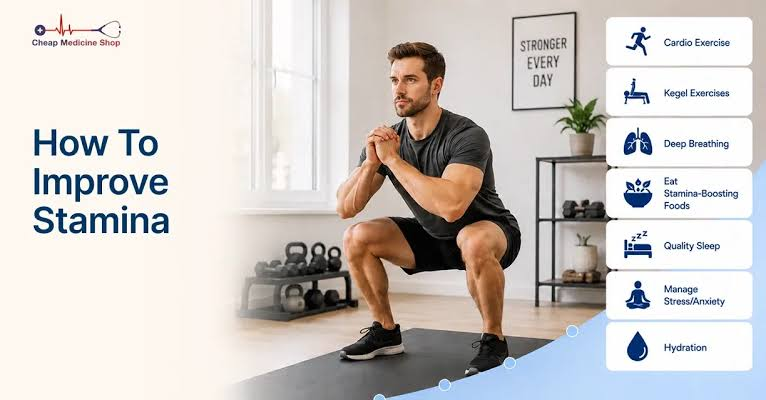

Stamina is an important part of physical fitness because it helps you stay active, perform daily activities comfortably, and exercise for longer periods without becoming exhausted too quickly. Whether you want to improve your running performance, build endurance at the gym, play sports, or simply feel more energetic throughout the day, developing stamina can make a positive difference in your lifestyle.
Many people experience low energy because of insufficient sleep, limited physical activity, unbalanced eating habits, or everyday stress. Fortunately, improving stamina does not always require expensive gym equipment or complicated workout programs. Simple activities such as walking, cycling, strength training, and eating nutritious meals can help improve your physical endurance over time.
The key is to start at your current fitness level and increase your activity gradually. In this article, we will explore four practical ways to improve stamina naturally through exercise, nutrition, recovery, and healthy daily habits.
1. Start with Cardiovascular Exercise
Cardiovascular exercise is one of the best ways to improve endurance and support heart and lung health. Activities such as brisk walking, jogging, cycling, swimming, and dancing encourage your body to use oxygen more efficiently during physical activity.
If you are a beginner, start with 10 to 15 minutes of comfortable walking each day. As your fitness improves, gradually increase the duration or pace. You can also alternate between a few minutes of faster walking and slower walking to make your sessions more challenging.
Adults should generally aim for at least 150 minutes of moderate-intensity aerobic activity per week. However, you do not need to reach this target immediately. Start with manageable sessions and build your routine gradually.
Consistency is more important than pushing yourself too hard during the first few days. Exercising intensely without preparation can cause excessive fatigue and increase the risk of injury.
Choose an activity you enjoy so that exercising becomes a regular part of your life. Over time, consistent cardiovascular training can help you perform everyday tasks with greater ease and improve your overall endurance.
2. Eat Nutritious Foods for Long-Lasting Energy
Your body needs adequate nutrition to maintain energy levels and support physical performance. A balanced diet provides carbohydrates for energy, protein for muscle repair, and healthy fats for normal bodily functions.
Include foods such as oats, whole-wheat bread, rice, potatoes, bananas, apples, vegetables, beans, lentils, eggs, milk, yogurt, fish, and lean meat according to your dietary preferences.
Carbohydrates are particularly useful before prolonged exercise because they help provide energy for your muscles. Protein supports recovery after physical activity, while fruits and vegetables supply important vitamins, minerals, and fiber.
Try to avoid relying heavily on sugary energy drinks, excessive caffeine, or highly processed snacks to overcome tiredness. These products are not substitutes for proper nutrition and sleep.
Meal timing can also help. If a large meal makes exercise uncomfortable, allow enough time for digestion before your workout. A light snack, such as a banana or yogurt, may be suitable before activity if you feel hungry.
Remember that no single food can dramatically increase stamina overnight. A balanced eating pattern combined with regular exercise is a more reliable way to improve physical performance.
3. Improve Sleep and Allow Your Body to Recover
Sleep plays a major role in maintaining energy, concentration, and exercise performance. When you consistently get insufficient sleep, you may feel tired during workouts and find it difficult to maintain your usual activity level.
Most adults need approximately seven to nine hours of sleep each night. Try to go to bed and wake up at similar times every day. Keep your bedroom comfortable, reduce distractions, and avoid excessive caffeine late in the day.
Recovery between workouts is equally important. Your muscles and cardiovascular system need time to adapt to the demands of exercise. Beginners can start with three or four moderate activity sessions per week and include easier days for recovery.
Gentle walking and stretching can be useful on lighter days, provided they feel comfortable. Increase the intensity of your workouts only when your body is ready.
Do not ignore persistent exhaustion, unusual breathlessness, dizziness, or weakness. Low stamina can sometimes be associated with conditions such as anemia, thyroid problems, sleep disorders, or other medical issues. If fatigue continues despite adequate rest, consult a healthcare professional rather than relying on supplements or stimulants.
Good recovery helps you maintain a consistent exercise routine and work toward better endurance safely.
4. Stay Hydrated and Develop Healthy Daily Habits
Hydration is essential for maintaining normal body temperature, supporting circulation, and replacing fluids lost through sweating. Dehydration can contribute to tiredness, headaches, and reduced exercise performance.
Drink water regularly throughout the day, especially before and after physical activity. You may need additional fluids during long workouts or hot weather. Your needs depend on your activity level, climate, and individual health.
Along with hydration, simple daily habits can help improve your overall fitness. Take short walking breaks if you sit for long periods, use stairs when practical, and include more movement in your daily routine.
Set realistic goals that you can follow consistently. For example, you might aim to walk for 20 minutes, complete three weekly workouts, or gradually increase the distance you can cover comfortably.
Tracking your progress can also help you stay motivated. Record your walking duration, cycling distance, or how you feel during exercise. Notice whether activities become easier over time instead of focusing only on speed or intensity.
Avoid comparing your stamina with that of professional athletes or experienced gym users. Everyone starts from a different fitness level, and improvement takes time.
The best results come from combining regular movement, nutritious food, sufficient sleep, and proper hydration. These habits support both physical endurance and general well-being.
Conclusion
Improving stamina naturally requires patience and consistency. Cardiovascular exercise strengthens endurance, nutritious foods provide energy, quality sleep supports recovery, and proper hydration helps your body function effectively.